


Navigating the Journey of Building Artist Engine from Concept to Reality
- Feb 12
- 2 min read

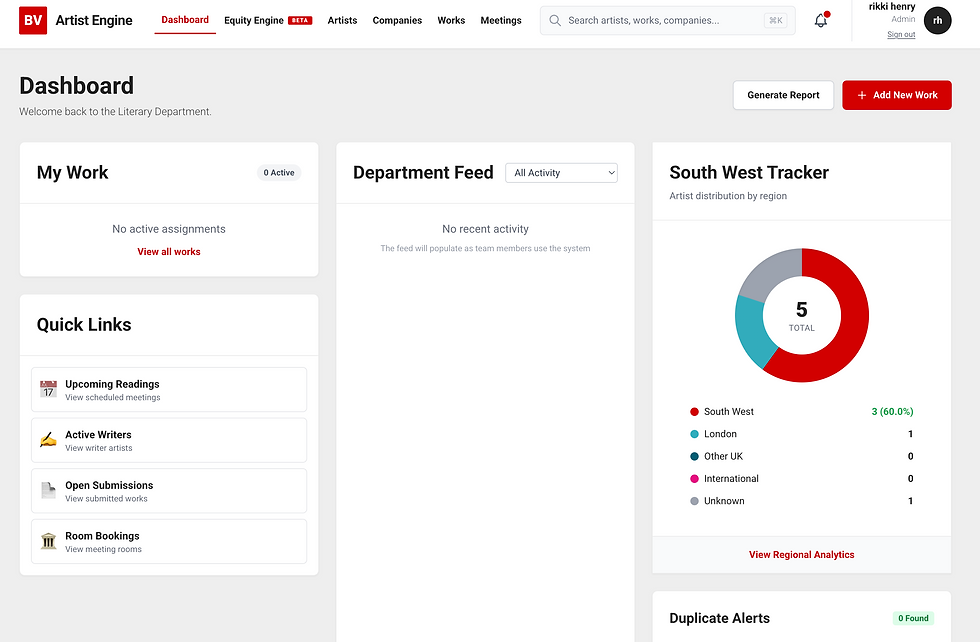
Building software for creative professionals means handling more than just features. It requires managing complex relationships, trust, and context while keeping the system easy to use under pressure. Artist Engine is a platform designed to bring artists, producers, literary teams, and decision-makers together in one workflow that supports managing artists, works, companies, reviews, and decisions.
This post shares the story of how Artist Engine evolved from an idea into working software, focusing on the challenges faced, solutions applied, and lessons learned along the way.
Starting with Clear Documentation
From the start, the project relied on detailed documentation stored in the `artist_engine_docs/` folder. This included:
spec.md: Defined the overall product goals and intent.
data_model.md: Served as the source of truth for the database schema.
ux_flows.md: Mapped out user interactions and process expectations.
prompt_plan.md: Outlined the implementation roadmap and priorities.
This documentation kept development focused and prevented drifting into unplanned features. The team committed to building only what aligned with the documented vision, which helped maintain clarity and direction throughout the project.
Tackling Database Policy Challenges Early
One of the first major hurdles appeared as a runtime error related to database policies:
Error `42P17`: infinite recursion detected in policy for relation "users"
This happened because the Row Level Security (RLS) policies on the `users` table referenced the same table in their checks, causing the database to enter a recursive loop. This kind of error is tricky because the code looks correct until the database policy engine evaluates it.
How the I fixed it
Identified where policies caused recursion by querying the same table.
Redesigned policies to avoid self-referential queries.
Applied fixes through SQL migrations and Supabase configuration updates.
This approach stabilized the app’s security layer and prevented runtime crashes, allowing the me to move forward confidently.
Building a Relational Workflow That Makes Sense
Artist Engine connects multiple entities: artists, their works, companies, reviews, and decision processes. Designing a system that holds these relationships clearly was essential. The team focused on:
Creating a data model that reflects real-world connections without unnecessary complexity.
Ensuring the user experience flows naturally between related items, such as linking an artist to their works and associated companies.
Supporting decision-makers with clear review and approval paths.
This relational approach means users can trust the system to keep context intact, reducing confusion and errors during creative workflows.
What Comes Next
The project is far from finished. Next steps include:
Expanding features based on user feedback while staying true to the documented vision.
Improving performance and usability under real-time pressure.
Continuing to refine database policies and security measures.
The team remains committed to building a platform that supports creative professionals with clarity and reliability.


Comments